Endpoint Management
Client & Site Structure
Organise endpoints by client, site and department — built for multi-customer operations.
Status: Available · Specified in FRD §8.2
What it is
Available today
AegisOne models the way service providers actually work: clients contain sites, sites contain endpoints, and departments cut across both. Access, reporting and billing all follow this structure.
This sits within endpoint management — enrol, inventory, group and control every device under management. It is part of the same platform as every other capability listed on this site, which means the data it produces is available to reporting, compliance evidence and the audit trail without an export step in between.
What you get
- Client records with contract and commercial context
- Site-level grouping and reporting
- Department mapping for chargeback and ownership
- Client-scoped dashboards and exports
- Capability group
- Endpoint Management
- Status
- Available
- Specification reference
- FRD §8.2
The specification reference points at the section of our functional requirements document that defines this capability, so that what is written here can be traced back to what was actually specified and built.
In the console
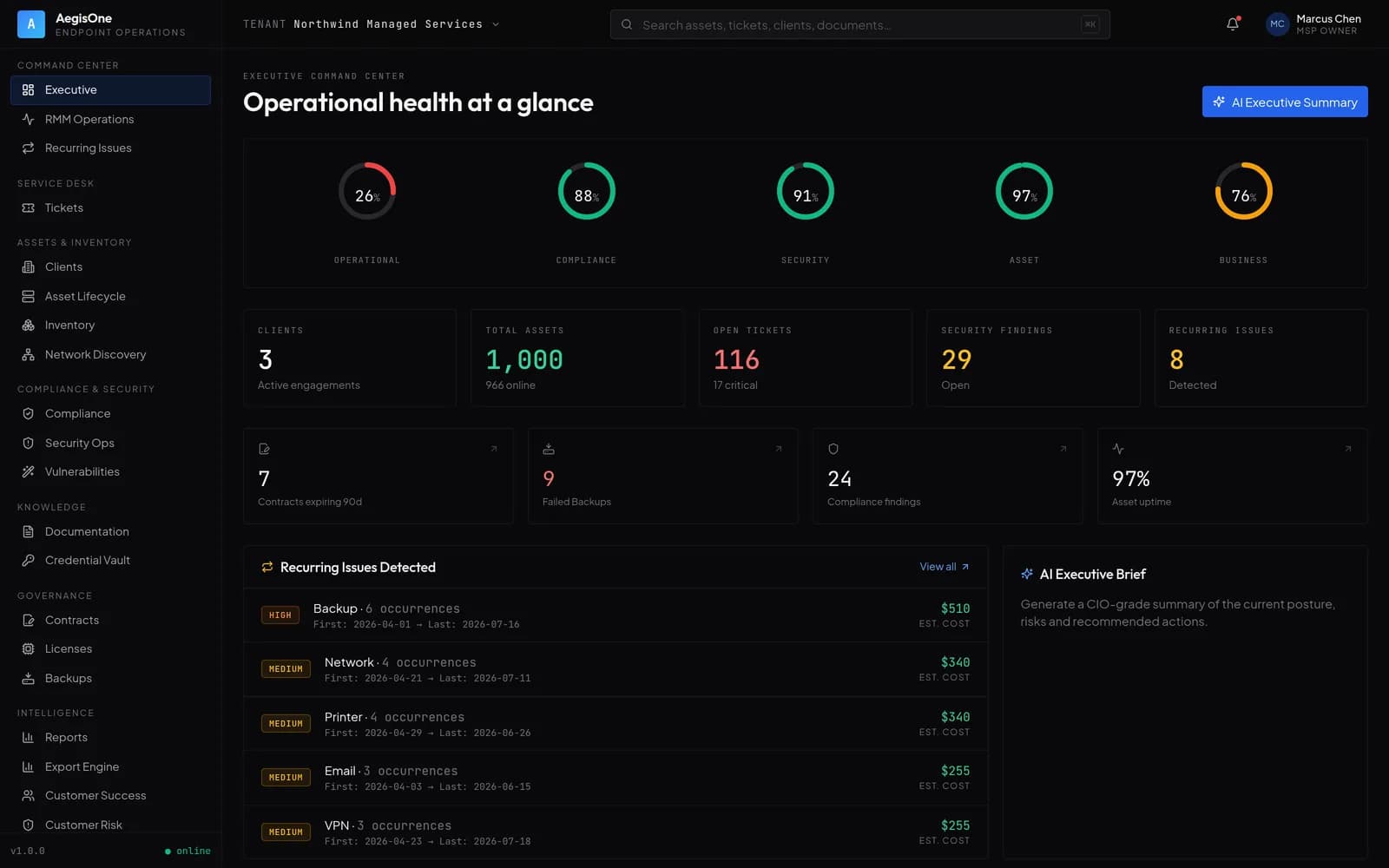
What client & site structure looks like in use
An illustration of the interface for this capability. The layout is the product; the values in it are invented for the example, which is why the frame says so.
Endpoint Management
Related capabilities
Other things AegisOne ships in this area. Enrol, inventory, group and control every device under management.
See client & site structure against a real estate
The 14-day demo environment comes pre-loaded with a realistic fictional managed estate, so you can exercise this capability with data in it rather than an empty console. No credit card required.